Case Study #1
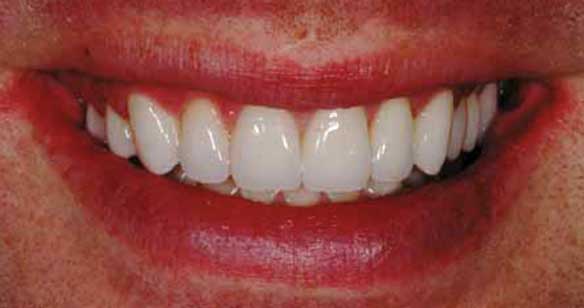
57yrs with darker yellow shades, responding well to tooth whitening
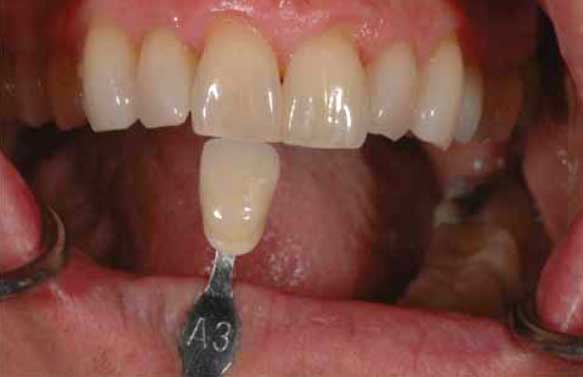
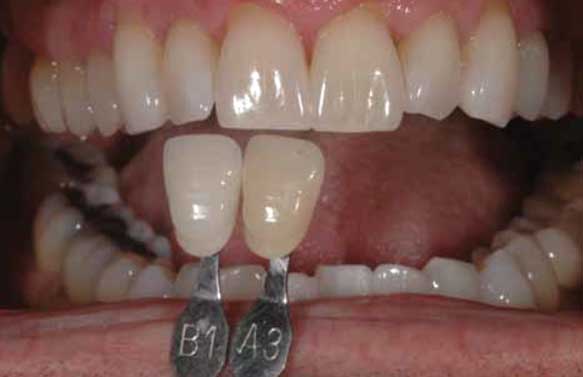
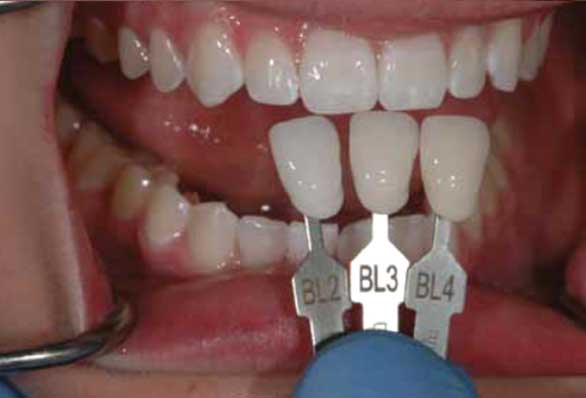
The shade was taken with the Vita Classic shade guide prior to in-office whitening. The number of shade shifts for tooth whitening is traditionally determined by the Vita classic shade guide arranged by value rather than with the standard arrangement by chroma. (Figure 4a) Each shade tab is referred to as one change in shade, but actually each shade tab more closely represents two or three shade changes. The gingiva and exposed cervical dentin were isolated with liquid dam prior to performing the BlanQuest® Pro In- Office tooth whitening procedure. The teeth were treated with three 10-minute sessions of BlanQuest® Pro in-office whitening and with use of an in-office light. The shade was then taken a second time at the end of the appointment using the same Vita Classic shade guide. The shade shift in this case was eight shades, based on the number of shades from A3 to B1. (Figures 4b, c) The anterior eight to ten teeth in both arches were whitened on the labial surface only. This provides adequate coverage for all the visible areas in most smiles.
Pre-treatment
Post-treatment
Case Study #2
18yr old female interested in teeth whitening
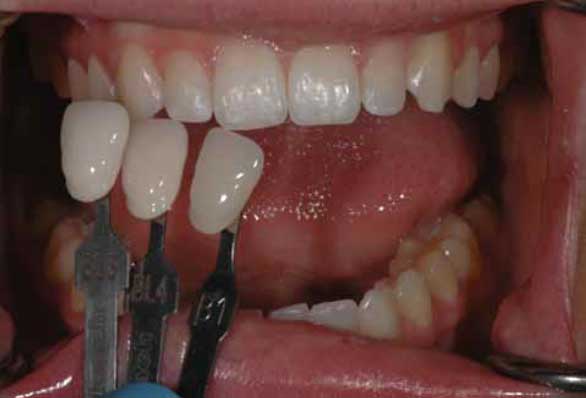
With the exception of her wisdom teeth, the permanent dentition was completely present and healthy. Note that studies have shown that whitening recently erupted teeth is safe and effective, and no apparent color differential lines appear as passive eruption occurs in the ensuing years. Light teeth will show far less shade shift, simply because there is an upper limit to whiteness. However, the final result is much brighter overall, especially in the darker cervical regions of the teeth. The results of this in-office whitening procedure using the BlanQuest® Pro can be observed in Figures 5a-c. Due to a lighter starting shade, only 3 sessions of 8 minutes each were needed, using the In-Office BlanQuest® Pro Teeth Whitening Kit and a light accelerator.
Pre-treatment
Post-treatment
Case Study #3
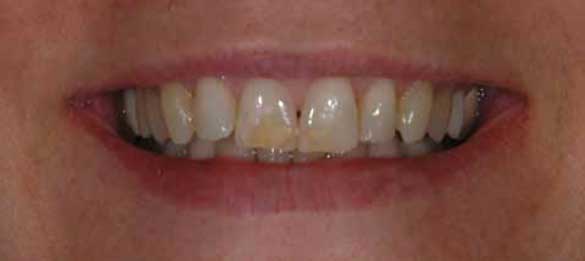
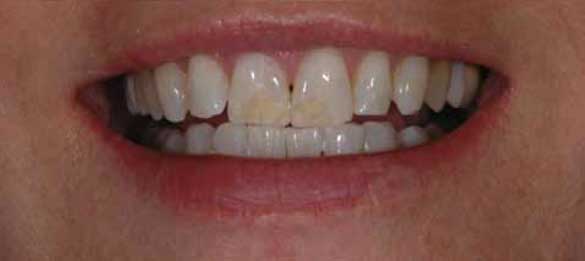
Patient needs teeth whitening, but has dark orange stains
The patient was first educated on tooth whitening and informed that it was likely that these stains would lighten some but would still be visible. An extended procedure was designed for this case, including 3 sessions of 15 minutes each using the In-Office BlanQuest® Pro Whitening Kit and an extra session of 8 minutes focused on the remaining darker areas. When treated, despite a significant amount of whitening, the dark orange stains on the central incisors were still quite prominent and was recommended extended whitening using the BlanQuest® Home take-home whitening trays or restorative correction with composites or porcelain veneers.
Pre-treatment
Post-treatment
Case Study #4
Patient presented with visible crown and restorations
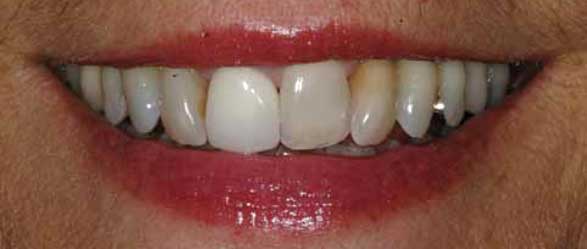
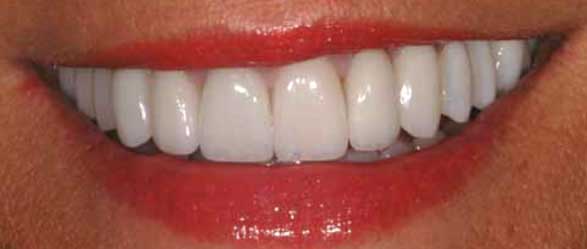
The patient presented with existing anterior restorations, including a visible crown, creating challenges in achieving a uniform shade outcome. It was explained prior to treatment that restorative materials such as crowns and composite restorations do not respond to whitening in the same manner as natural dentition, and therefore may remain unchanged in color following the procedure.
The teeth were treated using the BlanQuest® Pro In-Office whitening system with a light accelerator. Multiple sessions were performed to maximize the whitening potential of the natural dentition while maintaining patient comfort. When treated, the natural teeth demonstrated a significant improvement in brightness and overall shade.
Despite the successful whitening of the surrounding dentition, the existing crown remained unchanged, resulting in a more noticeable contrast post-treatment. This outcome highlights the importance of treatment planning in cases involving restorations, where replacement or modification of existing restorations may be recommended following whitening to achieve optimal esthetic results.
Pre-treatment
Post-treatment
Case Study #5
Patient presented with a request for teeth whitening
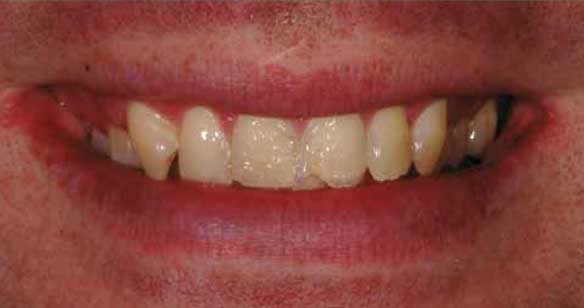
The patient presented with generalized yellow discoloration associated with dietary habits and natural aging. The initial shade was evaluated using the Vita Classic shade guide prior to treatment. Based on the starting shade, an in-office whitening protocol was selected to achieve optimal results.
The teeth were treated using the BlanQuest® Pro In-Office Teeth Whitening Kit in combination with a light accelerator. Three treatment sessions were completed, each designed to progressively enhance the brightness of the enamel and reduce overall discoloration.
When treated, the teeth exhibited a significant improvement in overall shade and brightness, with a more uniform and esthetically pleasing appearance. The most noticeable changes were observed across the anterior teeth, which contribute most to the visible smile.
This case demonstrates the effectiveness of in-office whitening in patients with generalized staining, providing immediate and noticeable results with proper case selection and treatment protocol.
Pre-treatment